| Home Page
History of B.F Skinner
Shaping Behaviour
Operant Conditioning
|
|
|
"I have nothing to say"
Burrhus Frederic (B.F.) Skinner majored in literature at Hamilton College in New York. He went to New York City in the late 1920s to become a writer, but he wasn't very successful. "I had nothing important to say," he later exlained. So he decided to go back to school, and went to Harvard to study psychology, since he had always enjoyed observing animal and human behavior. For the most part, the psychology department there was immersed in introspective psychology, and Skinner found himself more and more a behaviorist. He worked in the lab of an experimental biologist, however, and developed behavioral studies of rats. He had always been a tinkerer, and loved building Rube Goldberg contraptions as a kid; he put that skill to use by designing boxes to automatically reward behavior, such as depressing a lever, pushing a button, and so on. His devices were such an improvement on the existing equipment, they've come to be known as Skinner boxes. As Skinner became more and more frustrated about the fact that behaviorism wasn't having a large enough impact on psychology, he began devoting most of his time to answering the question of why behaviorism should be a science.
|
| |
Skinner's main goal was the prediction and control of behavior.
Skinner believed that behaviorism could be used as a tool to help create a better environment for people to live in. |
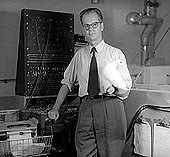 Skinner believed behaviorism should be used in understanding the human as a behaving individual; and (with the discovery of operant conditioning and use of behaviorist theory) that a new utopian society could be created.(Go To 'Home Page')
 |
| |
Skinner received his PhD in 1931. In 1936 he took an academic position at the University of Minnesota where he wrote The Behavior of Organisms and began his novel Walden II, about a commune where behaviorist principles created a new kind of utopia. |
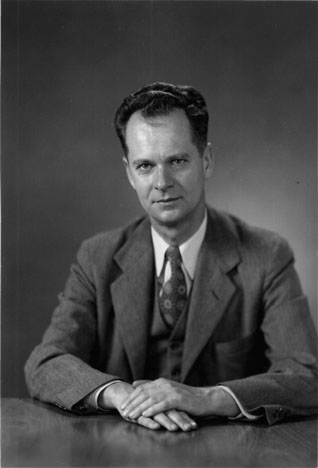 In his books such as, Reflections on Behaviorism and Society, The Technology of Teaching, and most directly in Walden Two, Skinner tries to address some of the philosophical questions raised by behaviorism and defend his hopes for utopia
 |
| |
A charmed life
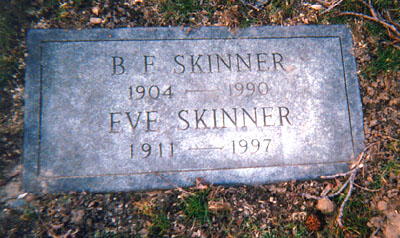
B.F. Skinner is thought of as one of the great behaviorists. He many works have had a profound effect on the psychology of the past as well as the present. On August 18, 1990, B.F Skinner died of leukemia after becoming a world renowned and accepted psychologist in fields spanning from Education to Human Resources. |
 “The world was beginning to face problems of an entirely new order of magnitude-the exhaustion of resources, the pollution of the environment, overpopulation, and the possibility of a nuclear holocaust, to mention only four. Physical and biological technologies could, of course, help. We could find new sources of energy and make better use of those we had. The world could feed itself by growing more nutritious grains and eating grain rather than meat. More reliable methods of contraception could keep the population within bounds. Impregnable defenses could make a nuclear war impossible. But what would happen only if human behavior changed, and how it could be changed was still an unanswered question. How were people to be induced to use new forms of energy, to eat grain rather than meat, and to limit the size of their families; and how were the atomic stockpiles to be kept out of the hands of desperate leaders?” (Reflection on Behaviorism and Society,1978,p.56)
 |
|
|


